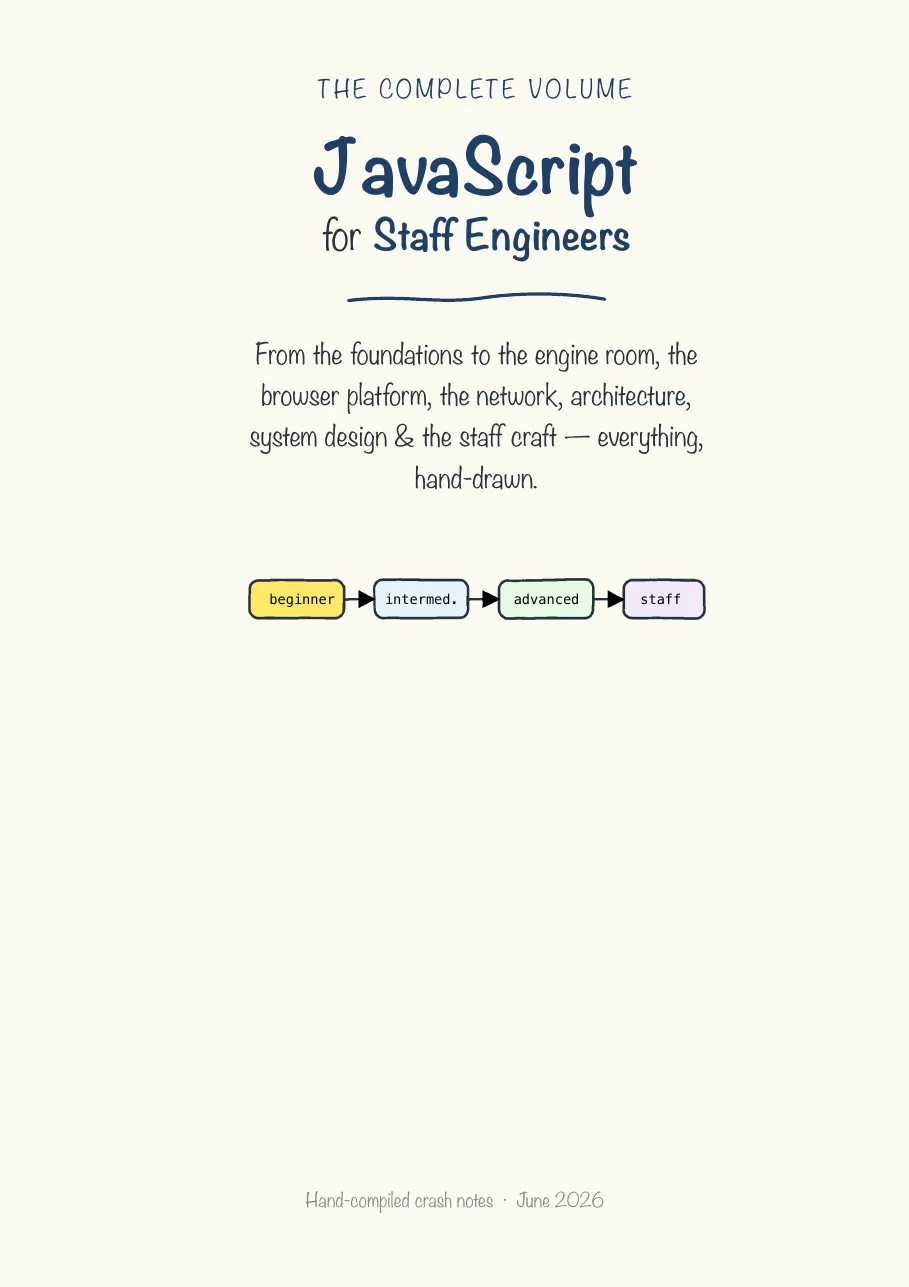
JavaScript for Staff Engineers
The definitive volume — architecture, trade-offs & decision records
What's inside
- JavaScript at depth: performance, concurrency, and the runtime
- Trade-off cards, ADRs, and system-design case studies
- Organised into parts, each with its own contents
- The reference you keep on the shelf for years
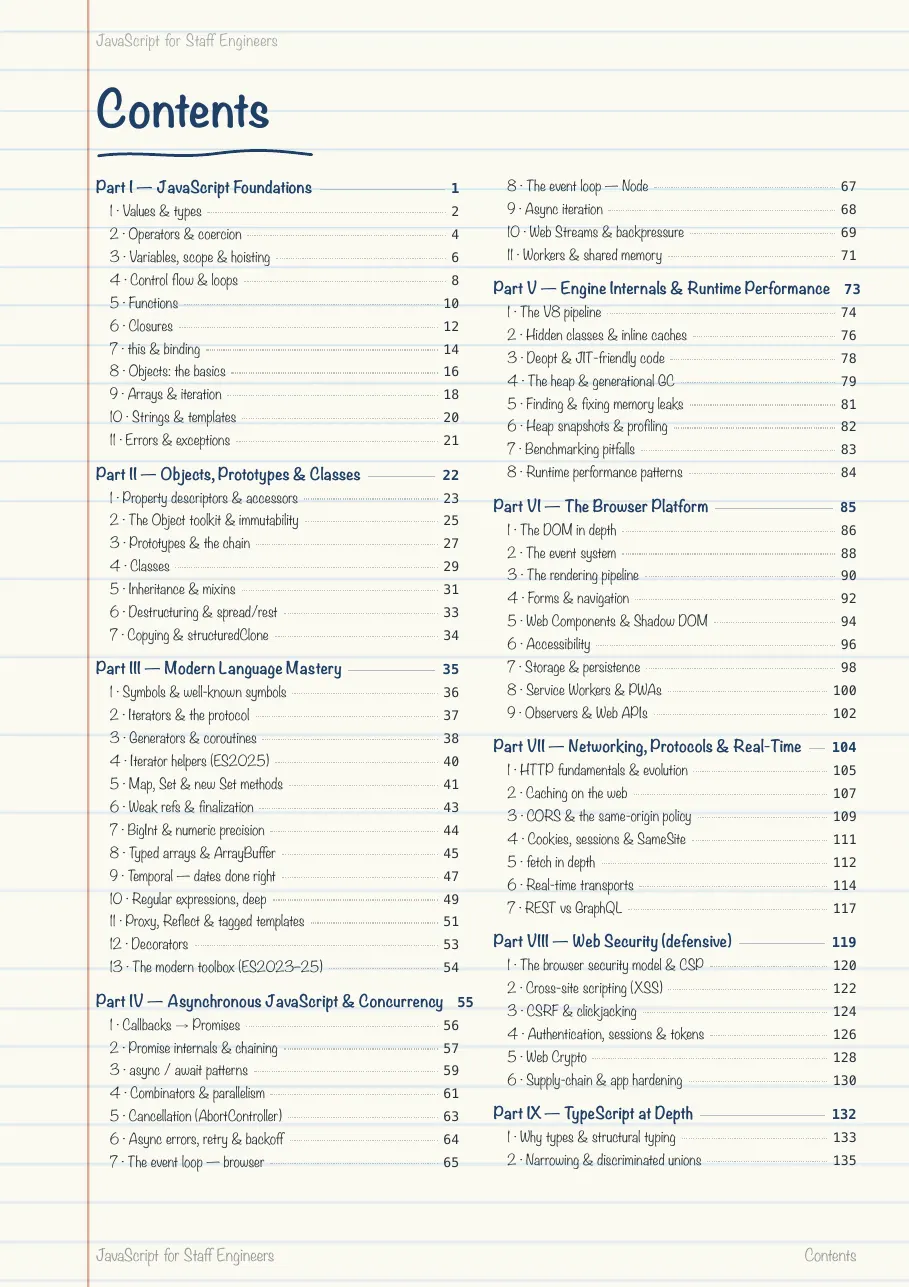
The parts
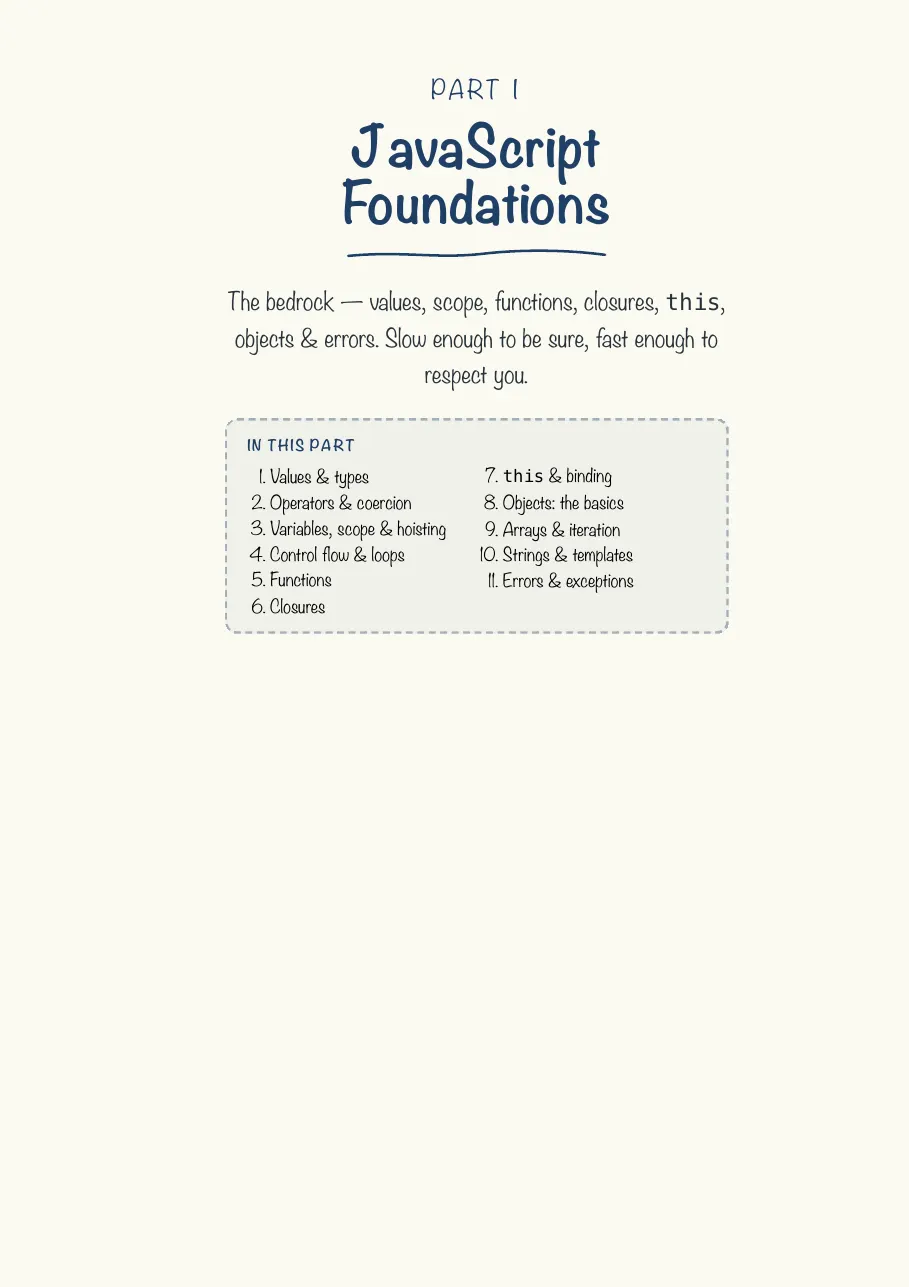
- Part I · JavaScript Foundations The bedrock — values, scope, functions, closures, this , objects & errors. Slow enough to be sure, fast enough to respect you.
- Part II · Objects, Prototypes & Classes How objects really store data, how the prototype chain powers inheritance, and how classes are the syntax on top.
- Part III · Modern Language Mastery The parts of JavaScript that arrived after the basics — protocols, metaprogramming & the toolbox that ships every year.
- Part IV · Async JavaScript & Concurrency One thread, never blocked — promises, the event loop, cancellation, streams & real parallelism with workers.
- Part V · Engine Internals & Performance What V8 does with your code — compilation tiers, hidden classes, garbage collection, and how to measure before you optimise.
- Part VI · The Browser Platform The runtime the language actually lives in — the DOM, the event system, the pixel pipeline, and the platform APIs that turn a script into an application.
- Part VII · Networking & Real-Time How bytes actually move between client and server — the protocols underneath fetch , the caching that makes the web fast, the cross-origin rules, and the transports that keep a page live.
- Part VIII · Web Security Thinking like a defender — the browser's security model and the app-developer practices that keep users safe. Every topic is framed as defense : how the platform protects users and how you configure it correctly.
- Part IX · TypeScript at Depth Types as a design tool — structural typing, inference, generics, and the type-level programming that makes a large codebase safe to change.
- Part X · Modules, Build & Tooling From source files to a shipped bundle — the module systems, package managers, bundlers, transpilers, and the tooling that turns a repo into an artifact.
- Part XI · Node.js & the Server JavaScript on the server — the Node runtime and libuv underneath it, streams and the file system, scaling across processes and threads, diagnostics, and the new runtimes (Deno, Bun, the edge).
- Part XII · Patterns & Clean Code Writing code that other people can change — the principles, the classic design patterns in their JavaScript-idiomatic form, and the functional toolkit for composition and safe data flow.
- Part XIII · Rendering & React / Next.js The one framework Part — how pages are rendered (SPA → SSR → RSC), how React actually works under the hood (fiber, hooks, concurrency), and how Next.js ties it together. Concepts first, then the tools.
- Part XIV · Architecture at Scale Keeping a large codebase soft — data flow and module boundaries, micro-frontends, API and library design, domain modeling, and the discipline of designing for change.
- Part XV · Web Performance Engineering Making it fast and keeping it fast — Core Web Vitals and how to measure them, loading and asset strategies, runtime performance, caching, and the budgets that stop regressions.
- Part XVI · Engineering Quality & Craft How teams ship reliably — testing strategy, CI/CD and progressive delivery, observability, code review and refactoring, and the documentation and quality systems that keep a codebase healthy.
- Part XVII · Frontend System Design Designing real features end to end — a repeatable framework (RADIO) and a set of worked case studies: autocomplete, news feed, chat, a collaborative editor, and a data dashboard.
- Part XVIII · The Staff Engineer's Path The dimension that isn't code — archetypes and scope, technical decision-making, design docs and strategy, leading migrations, and the influence, communication, and mentorship that define the staff+ role.
- Part XIX · Capstone & Reference Putting it all together — an ambitious capstone project that exercises the whole book, a Part-by-Part skills map, a master cheat sheet, the canon worth reading next, and a closing word.
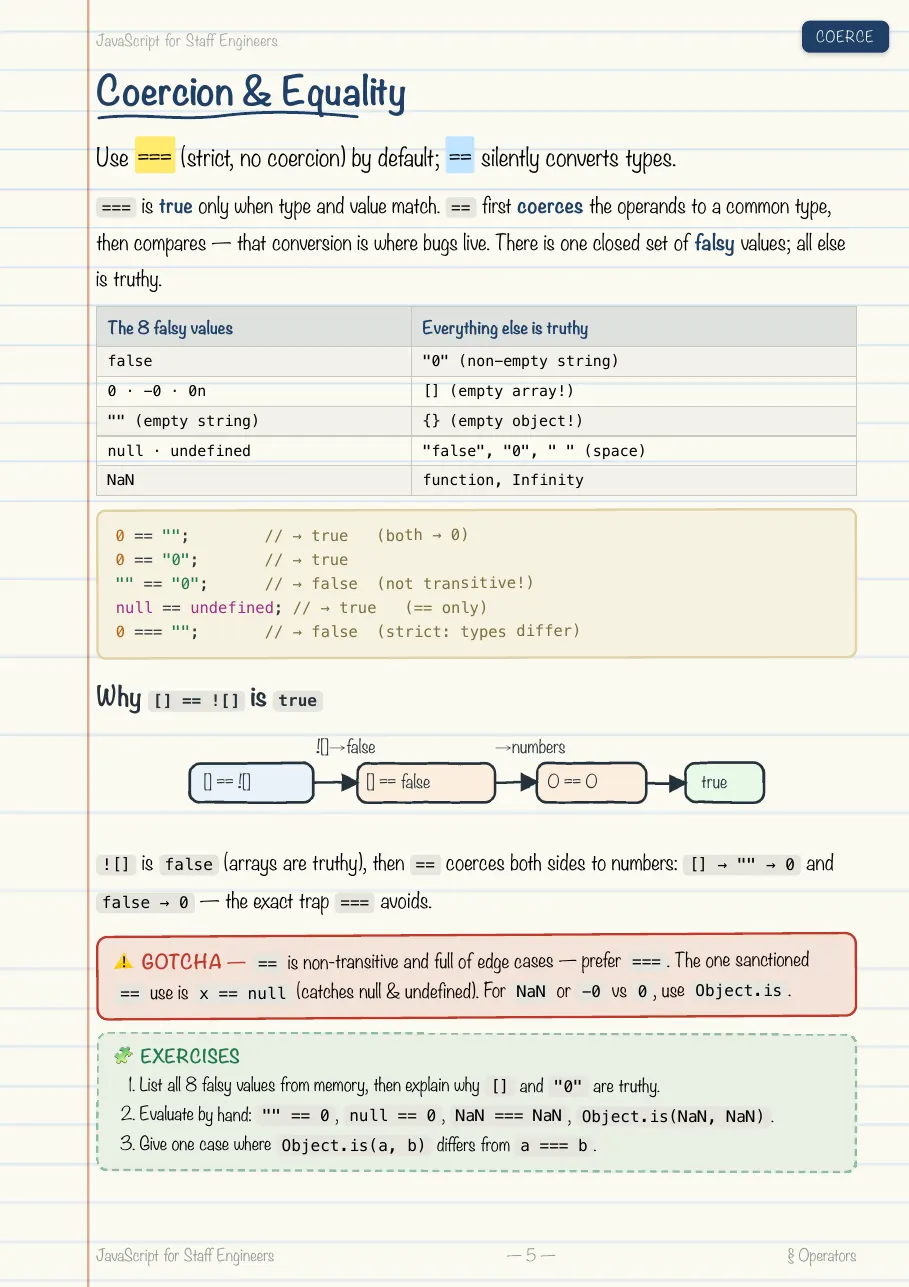
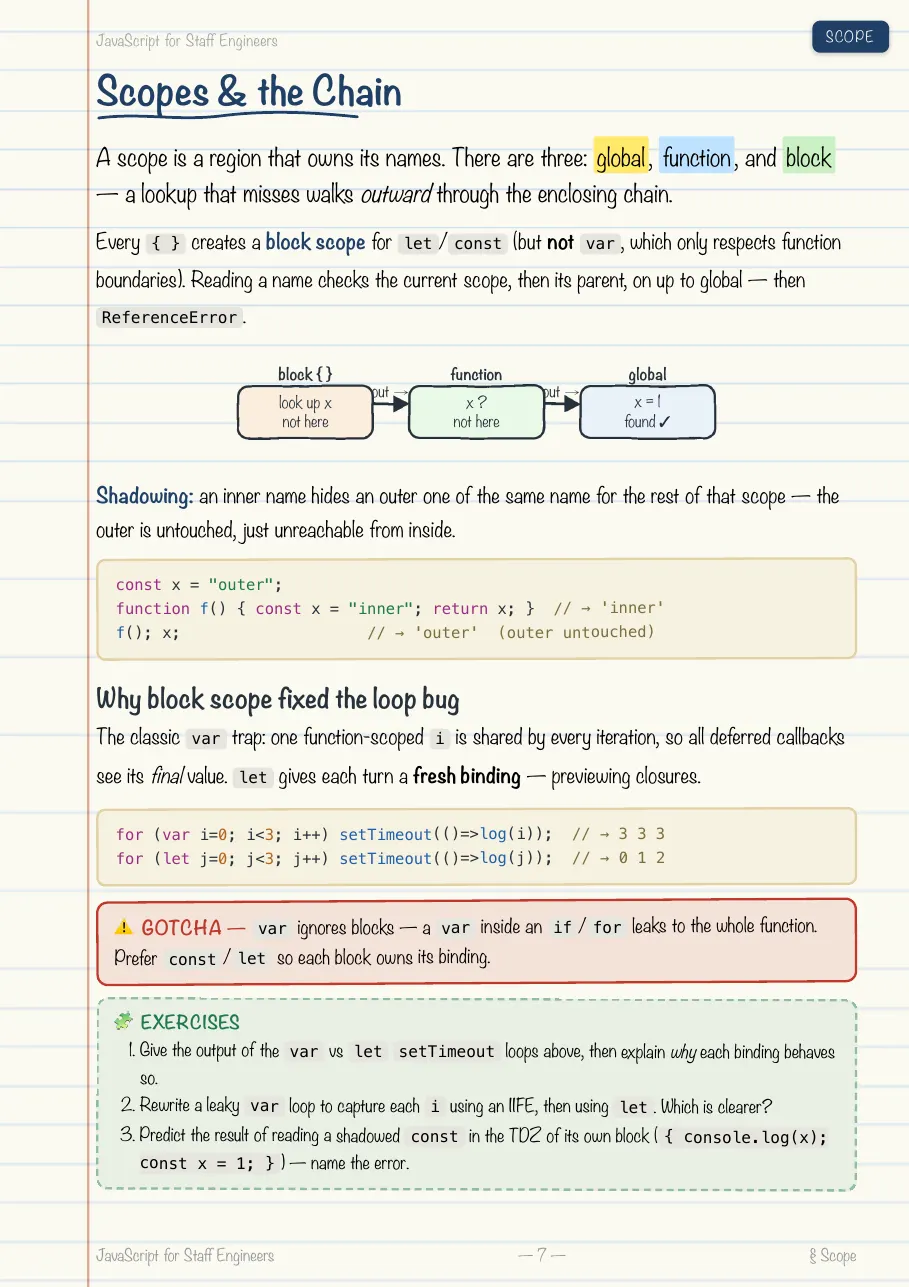
JavaScript for Staff Engineers is the definitive volume: JavaScript at the depth senior and staff engineers actually need — performance, concurrency, the runtime, plus trade-off cards, decision records, and system-design case studies.
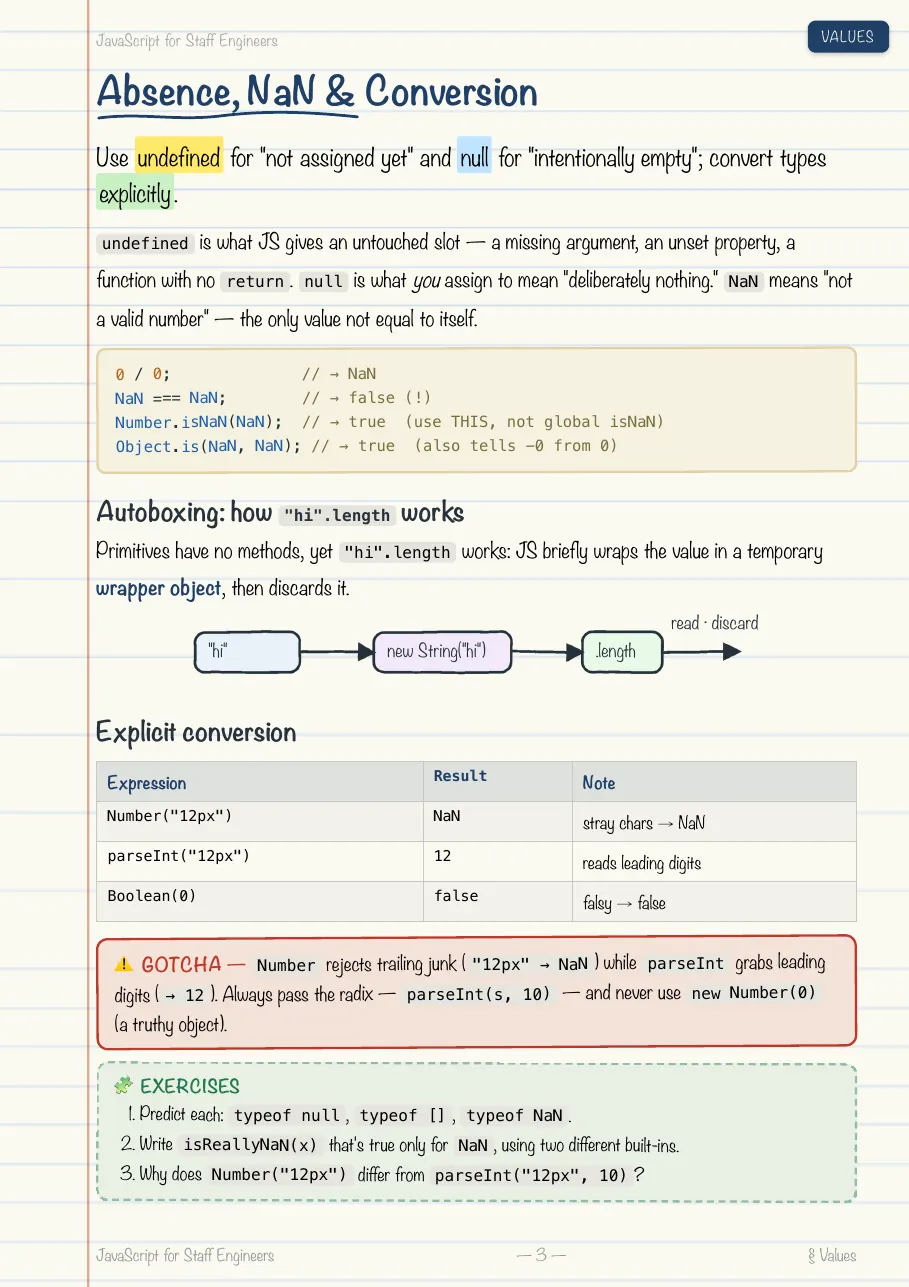
JavaScript is the language of the web, and this book respects your time: no filler, no padding, just the parts that matter — in a handwritten style that’s genuinely enjoyable to read.
Preview a few pages below, then grab the PDF. You’ll have it in your inbox in seconds.
Questions
What makes the Staff edition different?
It goes beyond the language into architecture, trade-offs, decision records, and system-design case studies — the judgement senior+ engineers are paid for.
What format is the book?
A print-ready PDF — the same handwritten "Classic Ruled" style throughout. Read it on any device or print it.
Do I need an account to buy?
No. Buy with just your email; we send the download link instantly and let you create an account later to re-download anytime.
Can I get a refund?
Yes — see our refund policy. If the book isn't for you, reach out.